



The late Charles Ong’ondo Were was a Kenyan politician and Member of Parliament (MP) for Kasipul Constituency in Homa Bay County. He was a dedicated member of the Orange Democratic Movement (ODM) throughout the two terms he served in Parliament. Were was elected in 2017 and then re-elected in 2022 under an ODM ticket, a tenure that was marked by significant contributions to his constituency, but also by controversies that polarized opinions.
Hon Charles met his untimely demise at the end of an assassin’s gun, during a targeted shooting along Ngong Road in Nairobi. His death sparked widespread reactions across Kenya, particularly on social media platforms like X. He leaves behind a political legacy that will last for years to come. He will be remembered for championing Kasipul Constituency’s development and the local community’s welfare while serving his people within a turbulent political landscape.
Were’s Life and Threats
Were started his educational journey at Karabok Primary School, where he completed his Certificate of Primary Education (CPE) in 1982, before proceeding to Oyugis Secondary School between (1983–1986). His subsequent academic achievements are as follows:
- Mt. Kenya University (2019): Master of Science in Procurement & Supplies
- Mt. Kenya University (2015–2017): Bachelor of Business Management
- Mt. Kenya University (2013–2014): Diploma in Business Management
- Meru University (2011–2012): Certificate in County Governance
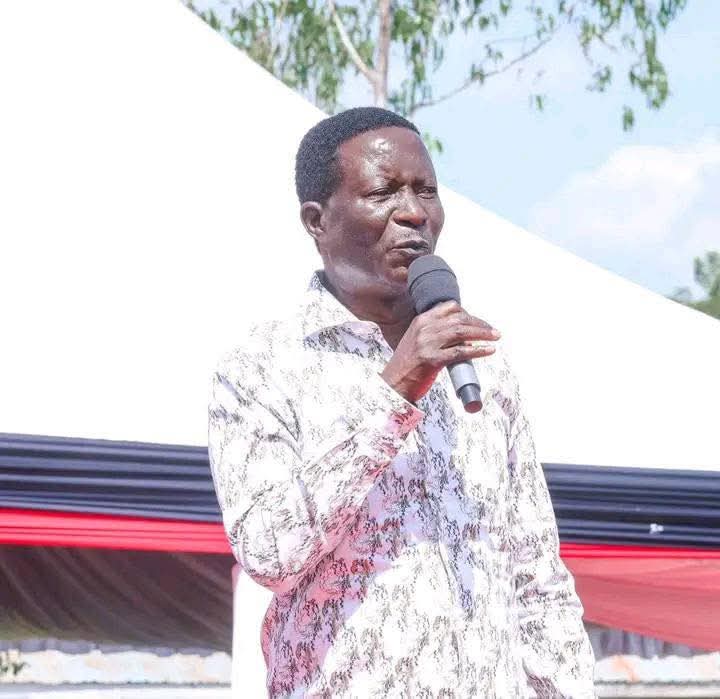
Mr. Ong’ondo Were’s transition from business to politics was driven by a desire to serve Kasipul, where he focused on community development.
In the months leading to his death, Were repeatedly warned of threats to his life. In February 2025, he accused outsiders from neighboring constituencies like Migori and Kisumu of orchestrating violence in Kasipul, claiming they planned to disrupt public gatherings to target him. He recounted incidents at funerals in Nyatindo and God Nyango, where chaos and road blockages heightened his fears. A video circulating on social media showed Were alleging that a former MCA and others planned to use plainclothes police and youths to create chaos and assassinate him. Two weeks before his death, he ominously stated, “When you hear I have been killed, Kasipul will not be the same again,” a prophecy that resonated widely after his assassination.
Parliamentary Service
Kasipul Constituency is located in Homa Bay County in western Kenya. The constituency was established following the 2010 Kenyan Constitution, which restructured electoral boundaries, carving Kasipul out of the larger Kasipul-Kabondo Constituency. The constituency’s political landscape is heavily influenced by ODM, led by Raila Odinga. In past elections, it has always prioritized ODM-affiliated candidates. Kasipul’s voters have historically voted for leaders who address local issues like healthcare, education, and economic opportunities. However, the region has also experienced political violence, as seen during Were’s tenure.
Since its creation in 2013, Kasipul Constituency has had the following MPs:
- Oyugi Magwanga (2013–2017): Magwanga served as MP for Kasipul Kabondo before being the first MP for Kasipul. He was elected on an ODM ticket. Magwanga focused on infrastructure development and education, initiating projects like road upgrades and school construction. His tenure laid the groundwork for subsequent development efforts.
- Charles Ong’ondo Were (2017–2025): Were succeeded Magwanga, serving two terms until his death.
Charles Ong’ondo Were: Achievements
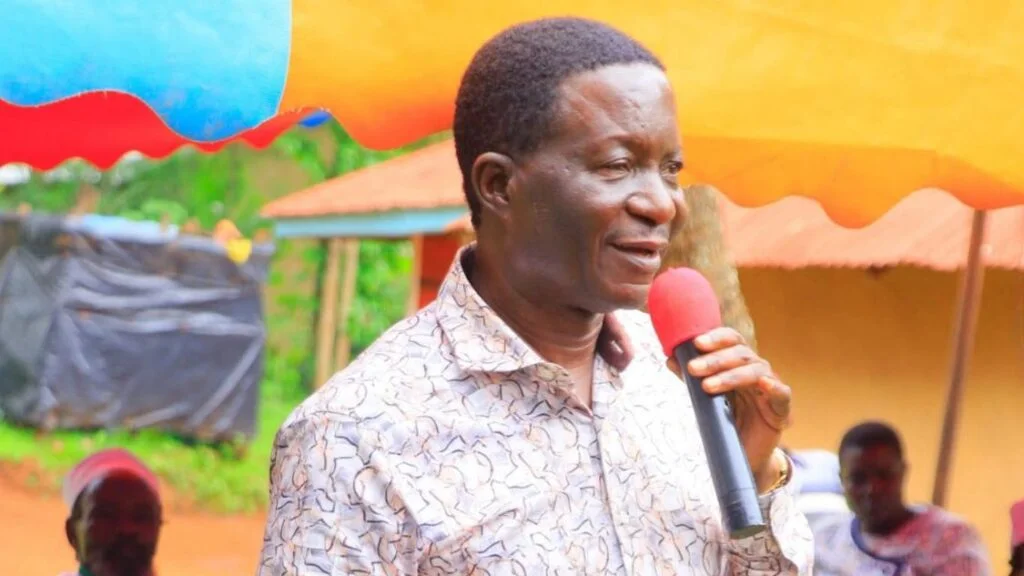
1. Healthcare Improvements
Were recognized the importance of accessible healthcare and worked to enhance health services in Kasipul. He collaborated with partners to establish and equip health facilities, addressing the growing population’s needs. His efforts included campaigns to sensitize youth on drug abuse and HIV/AIDS prevention.
2. Infrastructure and Education
As MP, Were prioritized projects to improve education and infrastructure. He spearheaded the construction of schools and supported the Constituency Development Fund (NG-CDF) to fund community projects. His focus on infrastructure aimed to improve road networks and access to markets, which is critical for Kasipul’s agricultural economy.
3. Political Leadership and ODM Loyalty
Were was a dedicated ODM member. He actively participated in party activities and grassroots campaigns. One of his final social media post, shared a day before his death, featured him leading an ODM rally during a funeral. He truly had strong connection with constituents and party unity. He served on the Departmental Committee on Blue Economy and Irrigation and was Vice-Chairperson of the Committee on Cohesion, contributing to national policy discussions.
4. Advocacy for Constituents
Were was known for his fearless advocacy when addressing issues affecting Kasipul constituency in and outside Parliament. For example, he previously expressed his concerns about external interference in Kasipul’s affairs. In a speech that has widely circulated on social media, the late MP accused outsiders of orchestrating violence to destabilize his constitency. His outspokenness earned him respect among supporters who saw him as a committed leader.
Controversies Surrounding Were
Despite his achievements, Were’s tenure was marred by controversies, particularly allegations of involvement in violent incidents in Kasipul. These issues fueled criticism and divided public opinion.
1. Alleged Links to Violence
Were faced accusations from some Kasipul residents of being linked to violent incidents, including deaths, injuries, and disappearances. Social media accounts, mostly from locals, depicted him as a leader who wielded power through a group of youths who provided security but were also accused of intimidation and violence when provoked. Complainants often claimed that police and local authorities failed to act against perpetrators.
A notable incident occurred in 2019, when police pursued Were over a gang attack at a hotel in Oyugis town that left one person dead and others injured. The attack was allegedly directed by Were, though he distanced himself from the incident and offered to cooperate with police investigations.
2. Flouting COVID-19 Guidelines
In July 2020, Were was arrested for holding a public gathering in Oyugis to distribute sanitizers, violating COVID-19 social distancing rules. He was fined KSh 15,000 and released, but the incident drew criticism for undermining public health efforts.
3. Claims of Intimidation
Were’s assertion of authority in Kasipul, including warnings to other politicians against engaging with residents without his permission, was seen by some as heavy-handed. Critics argued that his leadership style stifled dissent and fostered a climate of fear, particularly among those who opposed him.
Kenyan Response to Were’s Demise
Were’s assassination on April 30, 2025, near the City Mortuary roundabout in Nairobi shocked the nation. The targeted nature of the attack, coupled with Were’s earlier warnings about threats to his life, fueled intense reactions across Kenya, particularly on social media.
Official and Political Reactions
- National Assembly Speaker Moses Wetang’ula described the murder as a “cowardly act” that robbed Kenya of a “distinguished legislator” and advocate for his constituents.
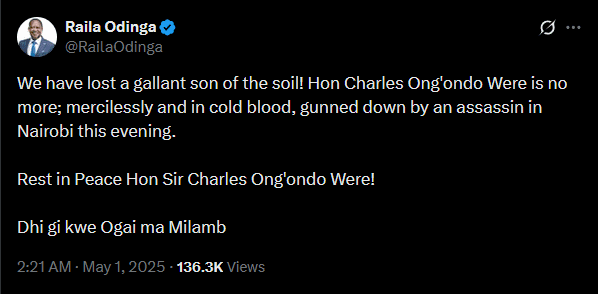
- ODM Leader Raila Odinga condemned the killing, calling Were a “gallant son of the soil” who was “mercilessly gunned down in cold blood.”
- President William Ruto urged police to conduct a thorough investigation, stating that the perpetrators “must be held accountable.”
- Interior Minister Kipchumba Murkomen noted that investigations had advanced, with homicide detectives actively pursuing leads.
Social Media Reactions
Social media, particularly X, became a platform for diverse sentiments, reflecting both grief and polarized views about Were’s legacy.
- Grief and Condemnation of Violence: Many Kenyans mourned Were’s death, emphasizing the insecurity highlighted by his assassination. Posts like those from @IanJamesMwaiK, @Evanceo17262449, and @Andrewkirop called the killing a “brutal reminder of how lawless and unsafe Kenya has become,” noting that Were had publicly stated his life was in danger months earlier. These users expressed sympathy and condemned the violence, regardless of Were’s actions.
- Celebration and Criticism: A significant number of posts, particularly from Kasipul residents, expressed relief or indifference, citing Were’s alleged involvement in scandals and violence. @HEPubungu1 celebrated the assassination, calling Were a “monster” involved in “many scandals and deaths” and stating, “It’s a new dawn in Kasipul.” Similarly, @jumaf3 suggested that Were was a “crook” who oversaw killings, quoting the adage, “He who lives by the sword dies by the sword.” These posts reflect deep-seated resentment among some constituents who viewed Were’s leadership as oppressive.
- Calls for Justice: Users like @mosesmascot highlighted Were’s prediction of his own death and called for thorough investigations, framing the incident as part of a broader pattern of political violence in Kenya.
While some saw him as a dedicated leader, others viewed his death as a consequence of his controversial actions.
Legacy and Impact

Charles Ong’ondo Were leaves behind a legacy of a leader who contributed to healthcare, education, and infrastructure, and improved Kasipul’s development trajectory. His work earned him admiration from supporters and ODM loyalists. Given his dedication to national issues, he also participated actively in Parliament and committee work. However, the allegations of violence and intimidation cast a shadow over his achievements, alienating some constituents and fueling negative perceptions.
His assassination, described by police as “targeted and premeditated,” has reignited discussions about political violence in Kenya. It joins a grim list of MP assassinations since independence, including Pio Gama Pinto and others, underscoring the risks faced by public figures. The ongoing investigation, supported by eyewitness accounts and CCTV footage, aims to uncover the motive and perpetrators, but the incident has already left a lasting impact on Kasipul and Kenya’s political landscape.

Find More on Our Socials