


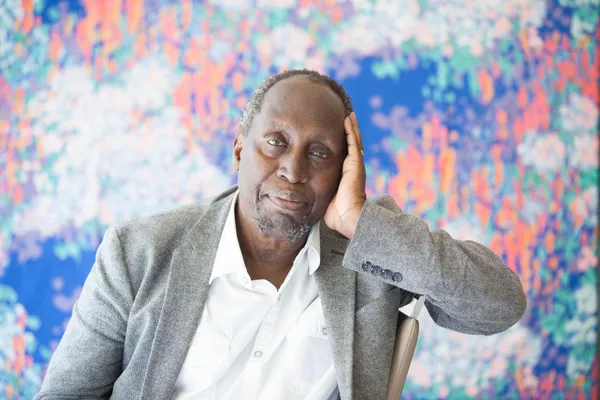
Ngũgĩ wa Thiong’o passed on Yesterday, 28th May 2025, at the age of 87. He exits the stage as Kenya’s literary giant and a global voice for cultural emancipation whose works have left an indelible mark on the world. With his passing, we pause to celebrate a life that reshaped African literature, challenged colonial legacies, and championed the power of indigenous voices.
A Voice Born in Crisis
Born James Ngugi in 1938, in the shadow of Kenya’s colonial oppression, Ngũgĩ’s early life was steeped in the Gikuyu traditions and the turbulence of the Mau Mau uprising. His first novel, Weep Not, Child (1964), marked a historic moment as the first novel in English by an East African. It was a poignant tale of a family caught in the throes of Kenya’s fight for independence, setting the stage for a career that would redefine African storytelling.
Ngũgĩ’s early works, including The River Between (1965) and A Grain of Wheat (1967), captured the complexities of a nation at a crossroads. His pen was both a mirror and a sword, reflecting Kenya’s pain and cutting through the myths of colonial benevolence. These novels, written in English, earned him international acclaim, but Ngũgĩ was only beginning.
Decolonizing the Mind
In the late 1970s, Ngũgĩ made a radical choice that would define his legacy: he renounced writing in English, the language of the colonizer, and embraced his native Gikuyu. His seminal essay collection, Decolonising the Mind (1986), became a manifesto for cultural liberation, arguing that African writers must reclaim their languages to reclaim their identities. “Language carries culture,” he wrote, and for Ngũgĩ, writing in Gikuyu was an act of defiance and love.
His first Gikuyu novel, Caitaani Mũtharaba-inĩ (Devil on the Cross, 1980), was penned on toilet paper during his year-long detention without trial in 1977, a testament to his unyielding spirit. The novel, a blistering critique of neo-colonial exploitation, was a triumph of resilience, proving that even prison walls could not silence him.
Theater as Revolution
Ngũgĩ’s commitment to his people extended beyond the page. In 1976, he co-founded the Kamĩrĩĩthũ Community Education and Cultural Centre in Limuru, a hub for grassroots theater in Gikuyu. His play Ngaahika Ndeenda (I Will Marry When I Want, 1977), co-authored with Ngũgĩ wa Mĩriĩ, electrified audiences with its bold critique of post-independence Kenya’s elite. The play’s success—and its threat to the status quo—led to the center’s destruction and Ngũgĩ’s imprisonment. Yet, the voices he amplified at Kamĩrĩĩthũ continue to inspire community-driven art across Africa.
A Global Literary Force
Exiled in 1982 after threats to his life, Ngũgĩ turned displacement into opportunity. From London to the United States, he taught at prestigious institutions like Yale, NYU, and the University of California, Irvine, where he served as Distinguished Professor and director of the International Center for Writing and Translation. His later works, like the satirical masterpiece Wizard of the Crow (2006), showcased his ability to blend humor, myth, and sharp political insight, earning him accolades like the Nonino International Prize (2001) and the Erich-Maria-Remarque Peace Prize (2019).
Ngũgĩ’s memoirs—Dreams in a Time of War (2010), In the House of the Interpreter (2012), and Birth of a Dream Weaver (2016)—offered intimate glimpses into his journey, from a barefoot boy in colonial Kenya to a global literary icon. His translations, including The Upright Revolution into 33 African languages, and his Gikuyu journal Mũtĩiri, underscored his lifelong mission to elevate African voices.
As we mourn his passing, we celebrate a legacy that transcends borders and languages. Ngũgĩ wa Thiong’o’s words will continue to echo, urging us to decolonize our minds, reclaim our stories, and dream of a just world.
By writing in Gikuyu, he challenged African writers to embrace their languages. By critiquing power, he inspired generations to question injustice. And by living boldly—through detention, exile, and relentless creativity—he showed that stories can change the world.
Rest in power, Ngũgĩ. Your voice will never fade.